September Impressions
This time I worked solely on simple linocuts, mainly monochrome black and white prints. I used photos taken during our vacation trip to the Vosges in France and Zeeuws Vlaanderen in Holland, transfered and adjusted those for linocut, printed the lino plates on heavy paper. Some of the results presented on this page.
Die Maisons des Rochers
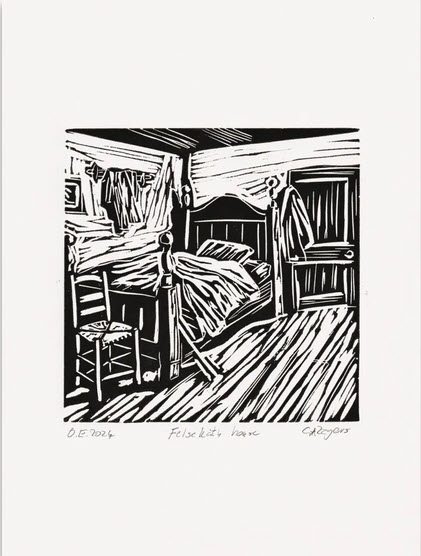
Die Maisons des Rochers is a historical site in Graufthal, located in northeastern France, within the Alsace region. This unique site consists of houses built into the cliffs, known as “rock houses” or “troglodyte dwellings.” These homes were created by carving into the sandstone cliffs and using the natural shelter of the rock faces.
The last person known to have lived in Die Maisons des Rochers was Catherine Ottermann, who lived there until her death in 1958. She was a local woman who became well-known as the final resident of these unique rock houses. After her death, the houses were abandoned as residences, but they have since been preserved as part of a historical and cultural site in Graufthal.
We visited Catherine’s house built into the cliffs. The Linocut print an impression of the untouched interior
Back to the sea and beaches
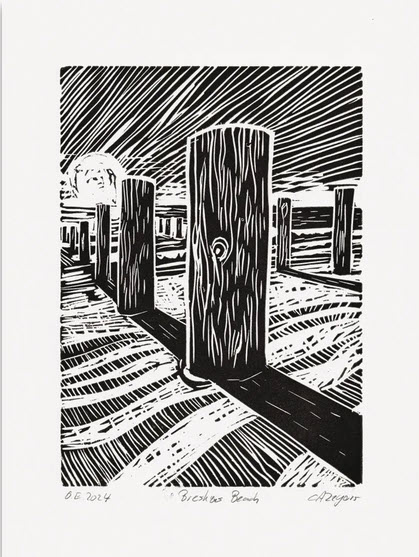
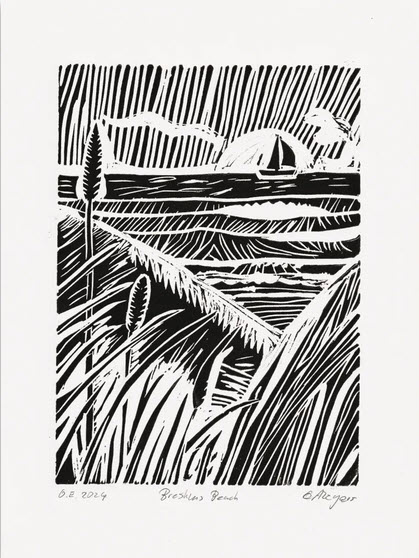
We travelled to the Dutch North Sea and Breskens beaches. We were very lucky enjoying late summer sun and temperature, no rain.
We walked along the beach each day. Nearly each day we watched and enjoyed nearly each day during our stay a beautiful sunset,
I tried to capture this moment with this linocut. For now black and white, next time I will try and expiriment with colors.
Breskens
Breskens is a charming coastal town known for its fishing heritage, scenic beaches, and maritime activities. Though small, it holds historical significance, particularly due to its role in World War II and its position along the vital Scheldt waterway. Today, it is a quiet but attractive destination, offering a blend of natural beauty, history, and local culture.
We rented a nice appartement overlooking on one side the beach direction North Sea and on the other balcony overlooking the harbor of Breskens.
Despite the many boats and ships passing the Scheldt we had wide good view on the North Sea, Wester Scheldt included the other side direction Vlissingen.
Impressive were the passing many large container carrying ships, destination Antwerp.
The carpentry
We visited the village Groed close to Breskens and walked through the streets with picturesque facades and houses built in Flemish style. In the Slijkstraat we visited the museum Het Vlaemsche Erfgoed. We saw the small shops outside and inside, the craft workshops and (unfortunately closed during our visit) Herberg de Natte Pij where you can spend the night in a historical atmosphere.
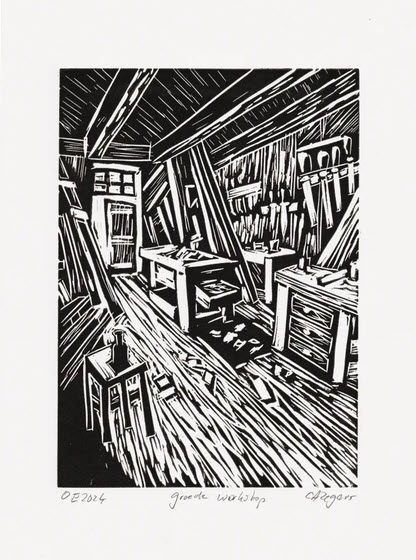
Amongst other shops and workplaces we visit a carpentry workshop from around 1880. We were informed that Hendrik Karels practiced his craft here. There were 6 carpentries in Groede around that time, of which two of then were located in the Slijkstraat.
I created a linocut impression of the interior of the carpentry.
Latest Blog Posts
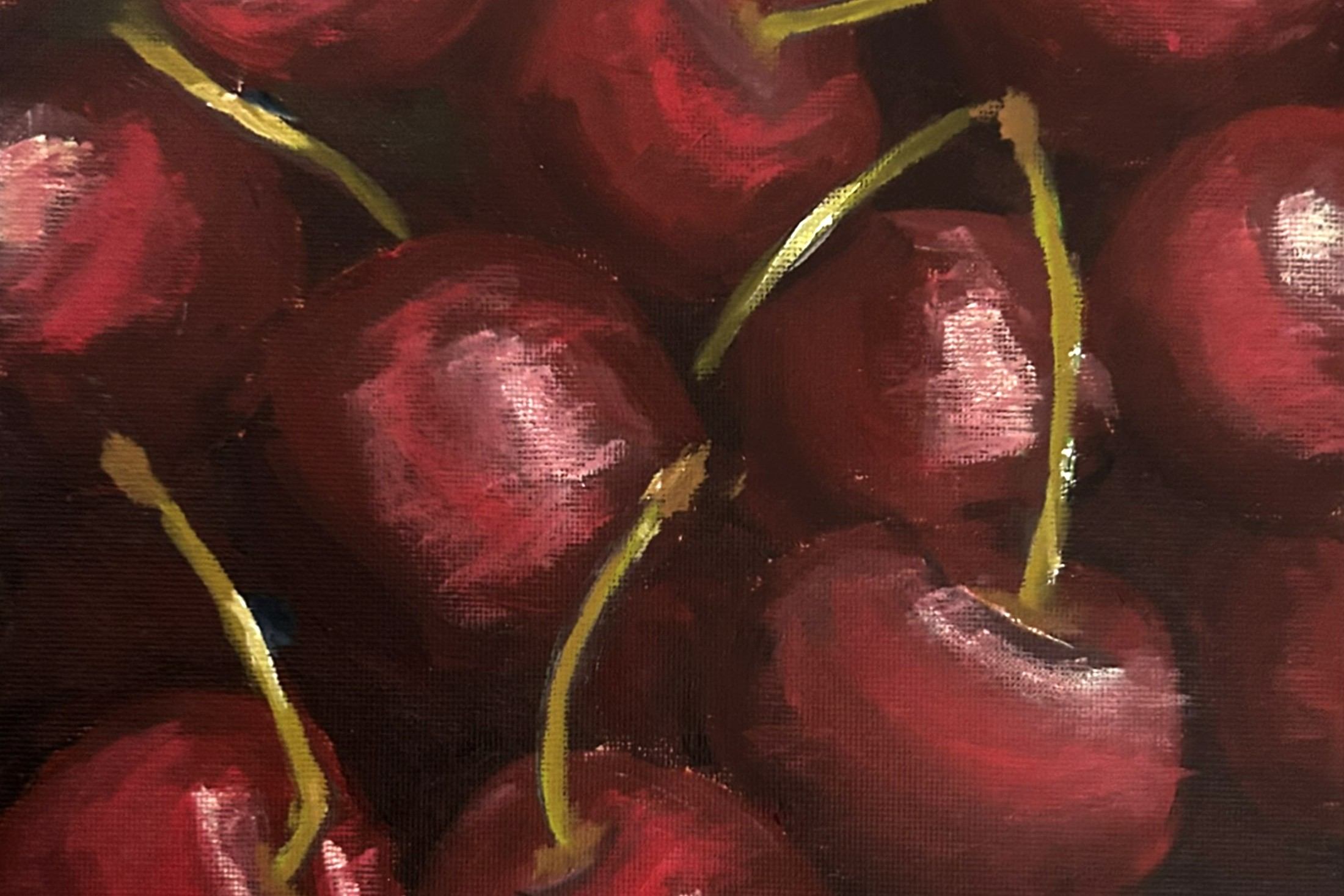
Sweet Cherries
Another finished oil painting, again on a small canvas board, this time featuring sweet, ripe cherries.
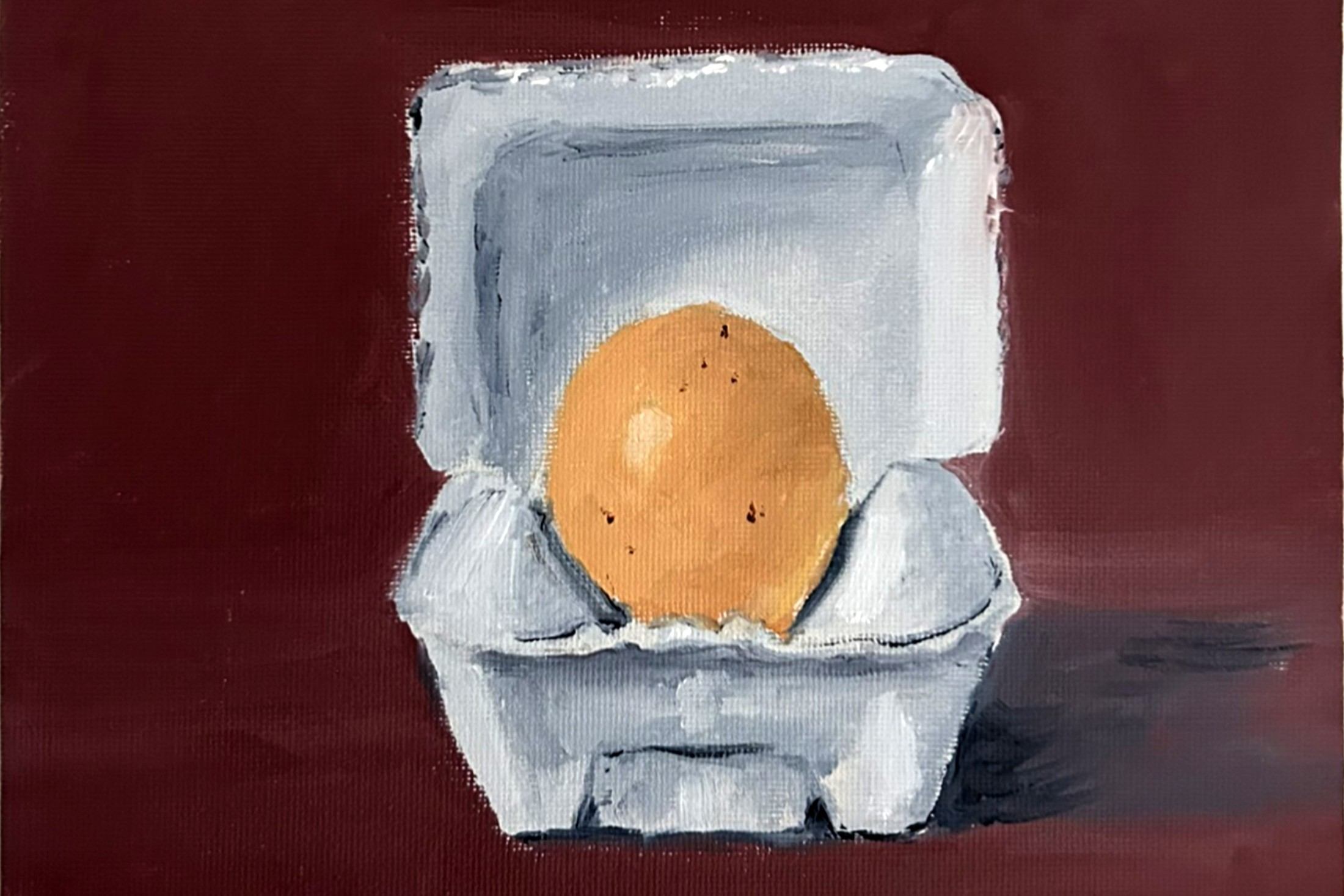
Just One Egg
A few months ago, I bought some oil paints for the first time, simply to experiment and discover how they look and feel compared with acrylics and gouache. It turned out to be a surprisingly rewarding…
Frogs and Dogs
As I mentioned in my previous blog post, I’ve been returning to gelli printing this past week and experimenting with a range of techniques. It has been a refreshing way to get back into the studio: pl…